
What Is a Lapeer County Court Docket
A docket is a chronological list of events in a case. It records each filing, hearing, motion, and order in the order they happen. Judges, clerks, lawyers, and the public use it to follow a case from start to finish. In Michigan courts the docket is often called the Register of Actions. The two terms describe the same thing: the court's official event-by-event history of a single case.
The docket is not the full case file. The file holds the actual paper, meaning the complaint, the motions, the briefs, the exhibits, and the signed orders. The docket only lists that those documents exist and when they were filed. A person tracking a Lapeer County case usually starts with the docket to see what has happened, then requests the full documents from the court office if the papers are needed. A separate meaning of the word "docket" also matters here. Courts publish daily dockets, which are the schedules that show which cases a judge will hear on a given morning.
Both meanings live on the county courts pages. The case docket answers what happened in one case. The daily docket answers what a courtroom will do today.
- Docket
- The chronological list of filings, hearings, and actions in a court case.
- Register of Actions
- Michigan's term for the court's event-by-event case history.
- Docket entry
- A single dated line noting one filing, order, or hearing.
- Daily docket
- The schedule of cases a judge will hear on a set date.
How to Find Lapeer County Daily Court Schedules
The county keeps a court dockets landing page that ties the schedules together. It routes visitors to daily judge schedules and to the statewide case search in one place. From there you can jump to a judge's calendar for the day or run a name or case-number lookup. The county courts landing page also links the same tools under its "Search For Cases" option, which points to MiCOURT Case Search.
The daily schedules matter most when you have a hearing or want to watch one. They list the matters set before a judge on a date, with hearing times and courtroom notes. The case search matters most when you want a case history. It shows the full Register of Actions for a matter, not just today's calendar. The county dockets page below is the fastest starting point for both paths.
The Lapeer County court dockets landing page collects the daily judge schedules and the case-search link in one hub.
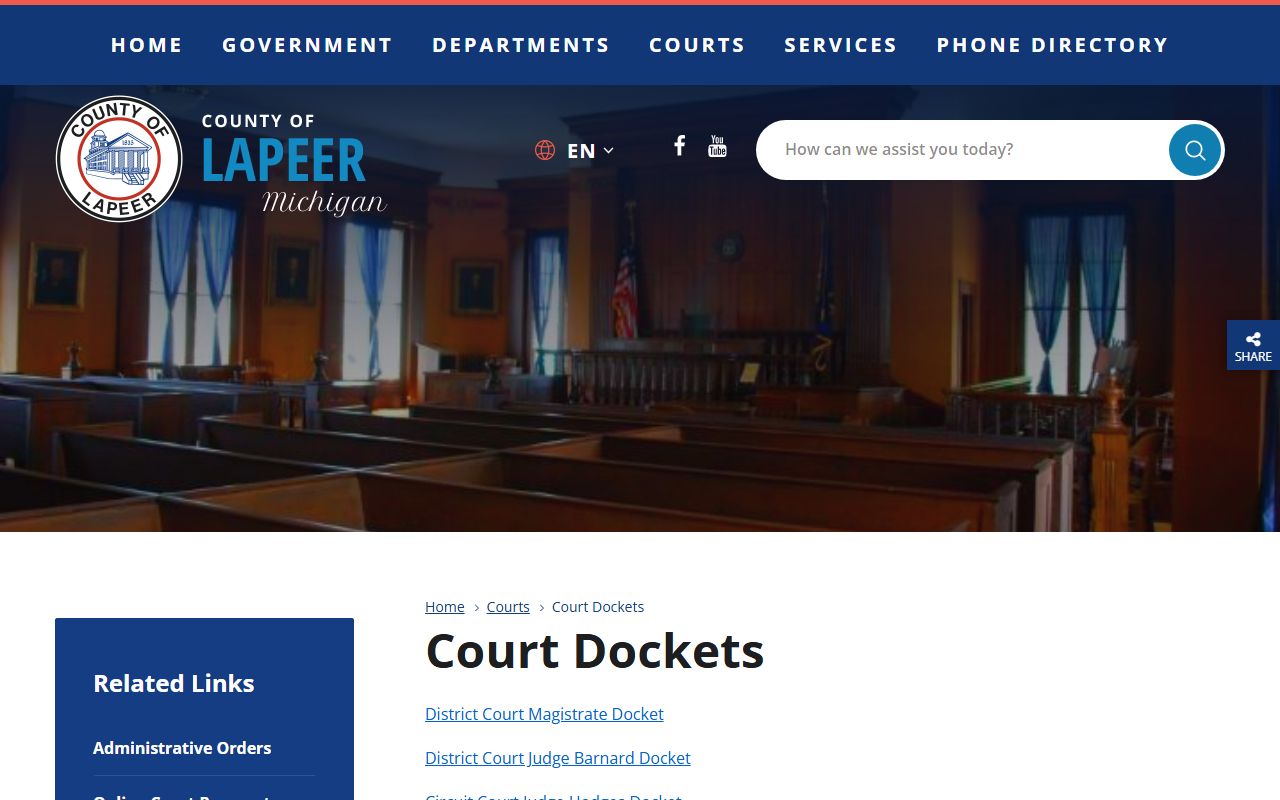
That single page is why most Lapeer County docket lookups start on the county site rather than a search engine.
Running a case-based docket search takes only a few steps.
- Open the county court dockets page or go straight to MiCOURT Case Search.
- Choose the court that holds the case, meaning the 40th Circuit Court, the 71A District Court, or the Lapeer County Probate Court.
- Enter a case number if you have it, since a number returns one clean result. If not, search by last name and first name.
- Open the matching case and read the docket entries, hearing dates, judge, and status.
Note: Lapeer County surnames can repeat, so a case number is the surest way to reach the exact docket you want without sorting through look-alikes.
What a Lapeer County Docket Entry Shows
Every docket entry is a dated line that records one action. Read together, the entries tell the story of the case. A single entry might note a complaint filed, a motion set, an order signed, or a hearing held. Hearing entries carry the details a person needs to show up on the right day, meaning the date, the time, the courtroom, and the assigned judge or magistrate.
The table below breaks down the fields that appear across a typical Lapeer County case docket. These fields draw from the standard event and hearing data Michigan trial courts record for civil, criminal, traffic, family, and probate matters.
| Field | What It Shows |
|---|---|
| Filing entry | The complaint, petition, citation, or other paper that opened the case, with its file date. |
| Arraignment | First criminal appearance where charges and rights are stated and bond may be set. |
| Pretrial | A scheduling or plea-discussion setting before trial in a criminal or civil case. |
| Motion | A party's request for a court order, noted with its file date and hearing setting. |
| Order | A judge's written ruling or command on a request or issue. |
| Judgment | The final decision resolving claims or awarding relief. |
| Sentencing | The entry setting or recording the punishment after a conviction. |
| Hearing date and time | When the matter is set to be called before the court. |
| Courtroom | The room assigned for the hearing at the county complex. |
| Judge or magistrate | The judicial officer assigned to hear the matter. |
Financial lines can also appear, showing fines, costs, restitution, bond, or a payment plan when that data is public.
Courts That Publish Dockets in Lapeer County
Three trial courts share the county complex, and each posts schedules for its own work. The 40th Circuit Court runs motion dockets, meaning set days when the judge hears the requests filed in civil, family, and felony cases. The 71A District Court runs the busiest calendars, with arraignments, traffic and civil-infraction dockets, misdemeanor settings, and small-claims and landlord-tenant hearings. The Probate Court sets hearing schedules for estates, guardianships, conservatorships, trusts, and mental-health matters before Judge Denis McCarthy.
A fourth office adds its own domestic-relations schedule. The Friend of the Court handles support, custody, and parenting-time enforcement in divorce and family cases, and it publishes the SMILE program schedule for parents in those cases. That schedule is not a courtroom docket in the usual sense, but families with an open Circuit Court family case often need it alongside their hearing dates.
The Friend of the Court page posts the SMILE schedule and domestic-relations enforcement details for family cases.
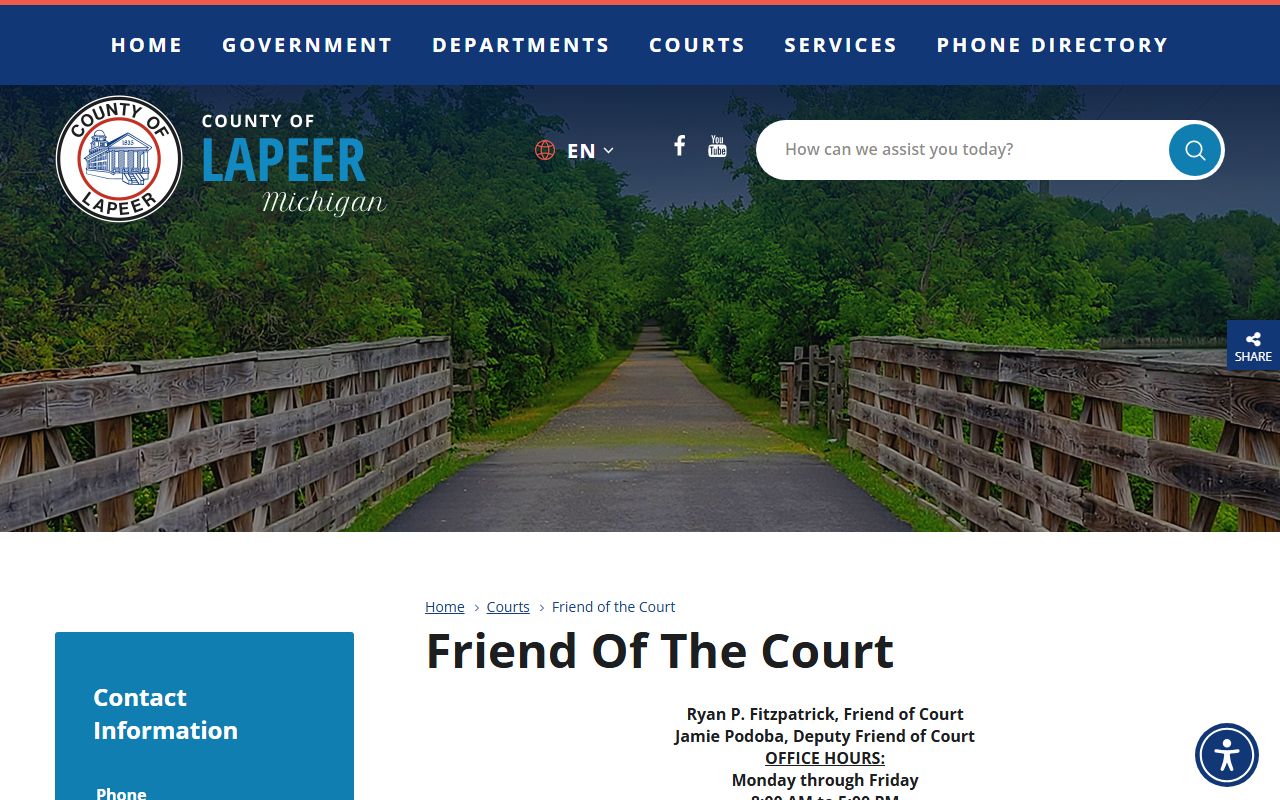
Pairing the SMILE schedule with the Circuit Court family docket keeps parents on track for both their court dates and their required program sessions.
The courts that most often publish dockets and schedules include the following.
- 40th Circuit Court, for civil, family, and felony motion dockets.
- 71A District Court, for arraignment, traffic, misdemeanor, and small-claims calendars.
- Lapeer County Probate Court, for estate, guardianship, and mental-health hearings.
- Friend of the Court, for the SMILE program schedule in domestic-relations cases.
Who Keeps Lapeer County Court Dockets
The office that maintains a docket depends on the court. For the 40th Circuit Court, that office is the Lapeer County Clerk. The County Clerk, Theresa Spencer, is also the Clerk of the 40th Circuit Court, so the same elected office accepts, dockets, and files Circuit Court pleadings and generates the motion hearing dockets. This dual role is set by Michigan statute, which is why a felony, divorce, or major civil docket in Lapeer County routes through the County Clerk rather than a separate court clerk.
The statute making the county clerk the clerk of the circuit court explains the structure behind Lapeer County Circuit Court dockets.
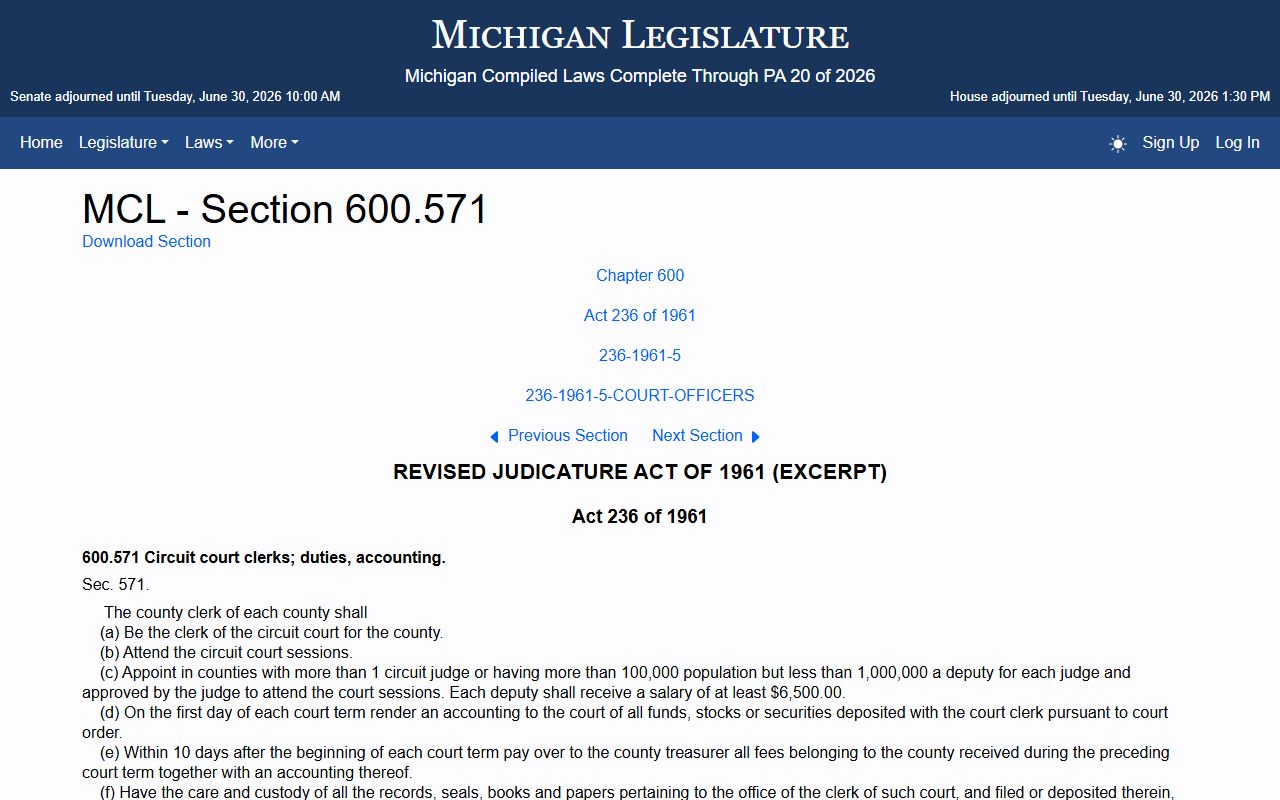
Because of that statute, Circuit Court docket and copy requests start at the County Clerk's counter on the second floor of the county complex.
The 71A District Court and the Probate Court each run their own court offices and keep their own dockets. District Court staff handle traffic, misdemeanor, small-claims, and civil calendars, while Probate Court staff keep the estate, guardianship, and mental-health schedules. MiCOURT still shows the docket entries for all three courts online, but certified copies and older records come from the office that owns the case. The full case file and sentencing detail sit with those offices as well, which is where the broader Lapeer County court records process picks up.
Docket Versus Full Case File in Lapeer County
A docket and a case file are related but not the same. The docket is the index. The file is the content. A person can read a docket and see that a motion was filed and later granted, yet still need the file to read the motion itself and the judge's written order. Knowing which one you need saves a trip and, sometimes, a fee.
The comparison below lays out how the two differ in format, access, and typical use.
| Docket | Full Case File | |
|---|---|---|
| Format | Dated list of entries | Actual documents and orders |
| Access | Often online through MiCOURT | May need a clerk request or visit |
| Copies | Screen view or printout of entries | Certified copies carry a fee |
| Use | Track hearings and case progress | Read pleadings, evidence, and rulings |
Note: MiCOURT often shows docket text without the underlying documents, so a full pleading or a certified order usually still means contacting the court that holds the file.
Public Access Rules for Lapeer County Dockets
Most Lapeer County dockets are open to the public. Michigan policy favors access to government records, and court case records are maintained and released under the Michigan Court Rules, chiefly the records rule that governs how courts keep files and what stays nonpublic. For court case dockets, the court rules and the clerk's procedures control inspection, copies, certified copies, and any redaction, rather than the general public-records law.
Michigan's Freedom of Information Act public policy statute sets the state's general preference for open government records.
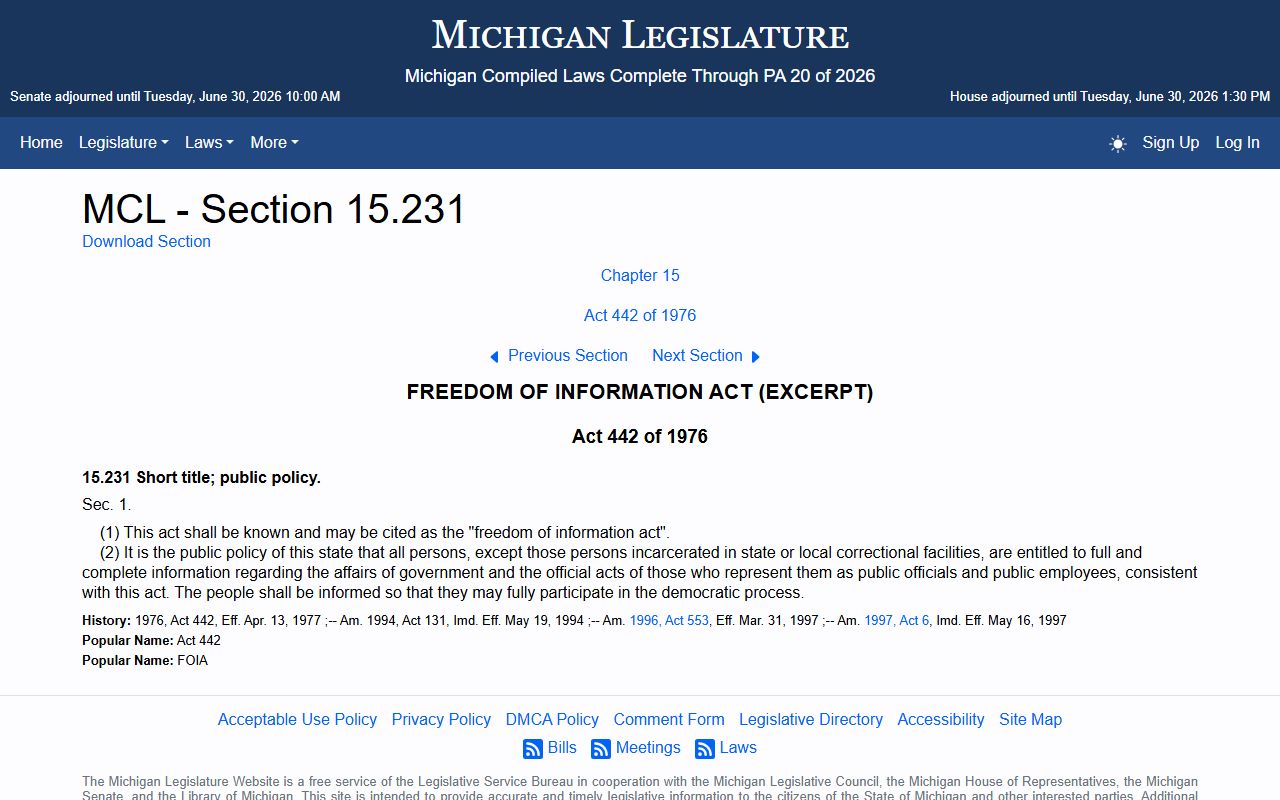
That open-records policy shapes the county's approach even though court dockets themselves run under the court rules.
The line between the two systems matters when you request paper. Court case dockets and files go through the court or the County Clerk under the court rules. Records held by county agencies, such as sheriff incident reports or administrative records, go through a public-records request. When a request does trigger the public-records law, a public body may charge permitted fees for labor, copies, and mailing.
Michigan's FOIA fee statute spells out the costs a public body may pass along for a records request.
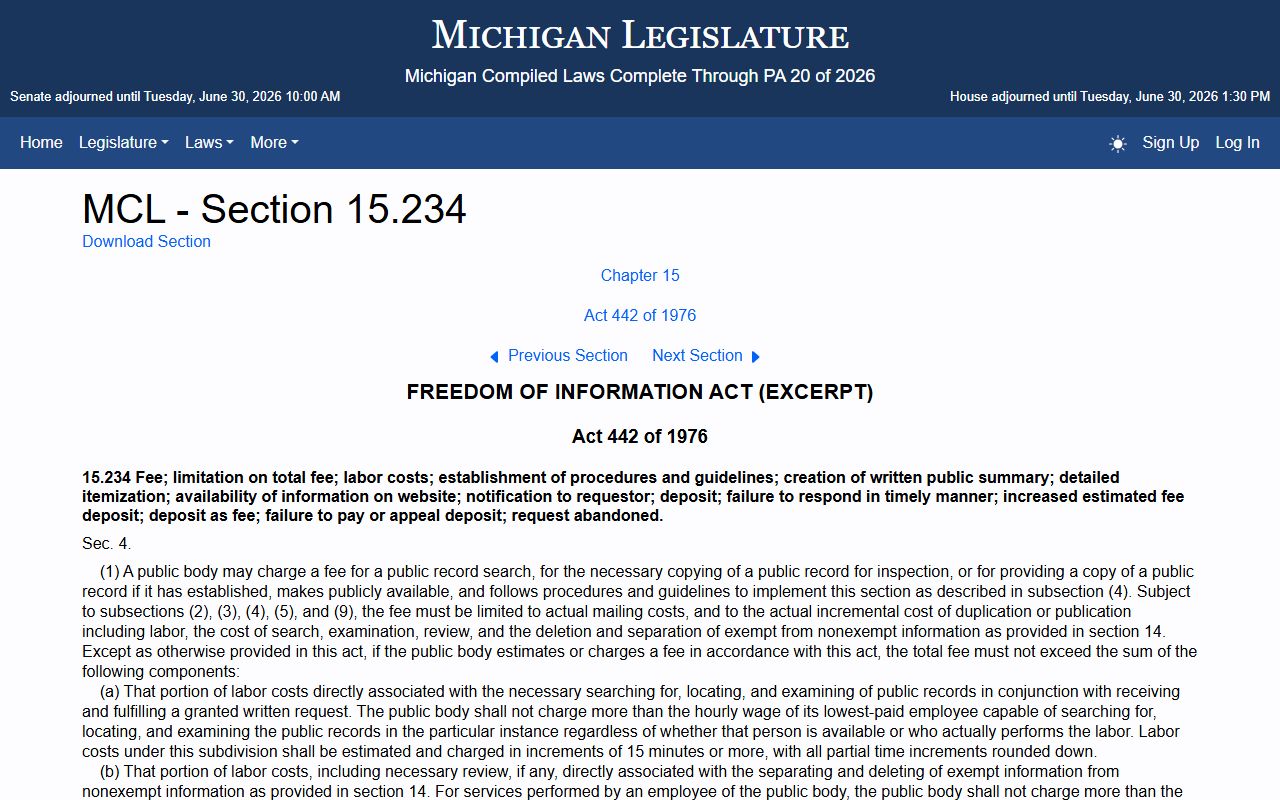
Knowing which channel applies, court rule or records request, tells you where to send the request and what fees to expect.
Why Some Lapeer County Dockets Are Missing
Not every case shows a public docket. Some matters are confidential by law, so their entries do not appear in a public search or come back with limited detail. This is normal, and it does not mean a record was lost. It means the law blocks public access to that case type.
Juvenile delinquency and child-protective cases in the Circuit Court Family Division are restricted under juvenile law. Adoption files are confidential, so name searches usually suppress the parties. Mental-health proceedings in Probate Court are limited because they involve medical information. Convictions that have been set aside under Michigan's Clean Slate rules become nonpublic, so a sealed or set-aside case will not appear the way an open conviction does. Courts also redact protected personal data, such as Social Security numbers, financial-account numbers, some birth dates, minor names, and victim information.
A blank result does not confirm a person has no case. The docket may be juvenile, sealed, set aside, or otherwise nonpublic, so confirm status with the court that would hold the file before drawing a conclusion.
Note: juvenile, adoption, and mental-health dockets are protected under statute, so front-counter staff cannot confirm or discuss a nonpublic case even when asked directly.
Phone Numbers for Lapeer County Schedule Questions
When an online docket is unclear or a hearing time needs confirming, a call to the right court clears it up fastest. Each court answers questions about its own calendar. Staff can explain the access process and confirm a public hearing date, though they cannot give legal advice or discuss a nonpublic case. All three trial courts sit in the county complex at 255 Clay St. in Lapeer.
The table below lists the direct lines for the courts and offices that set and keep Lapeer County dockets.
| Court or Office | Phone | Handles |
|---|---|---|
| 40th Circuit Court | 810-667-0358 | Motion dockets for civil, family, and felony cases |
| 71A District Court | 810-667-0314 | Arraignment, traffic, misdemeanor, and small-claims calendars |
| Probate Court | 810-667-0261 | Estate, guardianship, conservatorship, and mental-health hearings |
| County Clerk | 810-667-0356 | Circuit Court files, copies, and certification |
| Prosecutor | 810-667-0326 | Criminal case and victim-rights questions |
The 71A District Court answers its phones from 8:00 a.m. to 5:00 p.m., a wider window than its lobby hours, so a ticket or misdemeanor question is easiest to settle by phone late in the day. Probate Court keeps office hours until 5:00 p.m. as well, while the Circuit Court and County Clerk run from 8:00 a.m. to 4:30 p.m.