
What the Lapeer County Probate Court Handles
The Lapeer County Probate Court is one of three trial courts serving the county. It handles what happens to a person's estate, care, and property. Judge Hon. Denis McCarthy presides over the bench. Probate is described as Michigan's oldest court. The court opens a file when someone dies, when an adult or child needs a guardian, or when money and property need a manager. Mental Health Code cases also route through this court. All of it sits inside the county complex on Clay Street.
The court publishes its jurisdiction, judge, hours, and subject links on the Lapeer County Probate Court page.
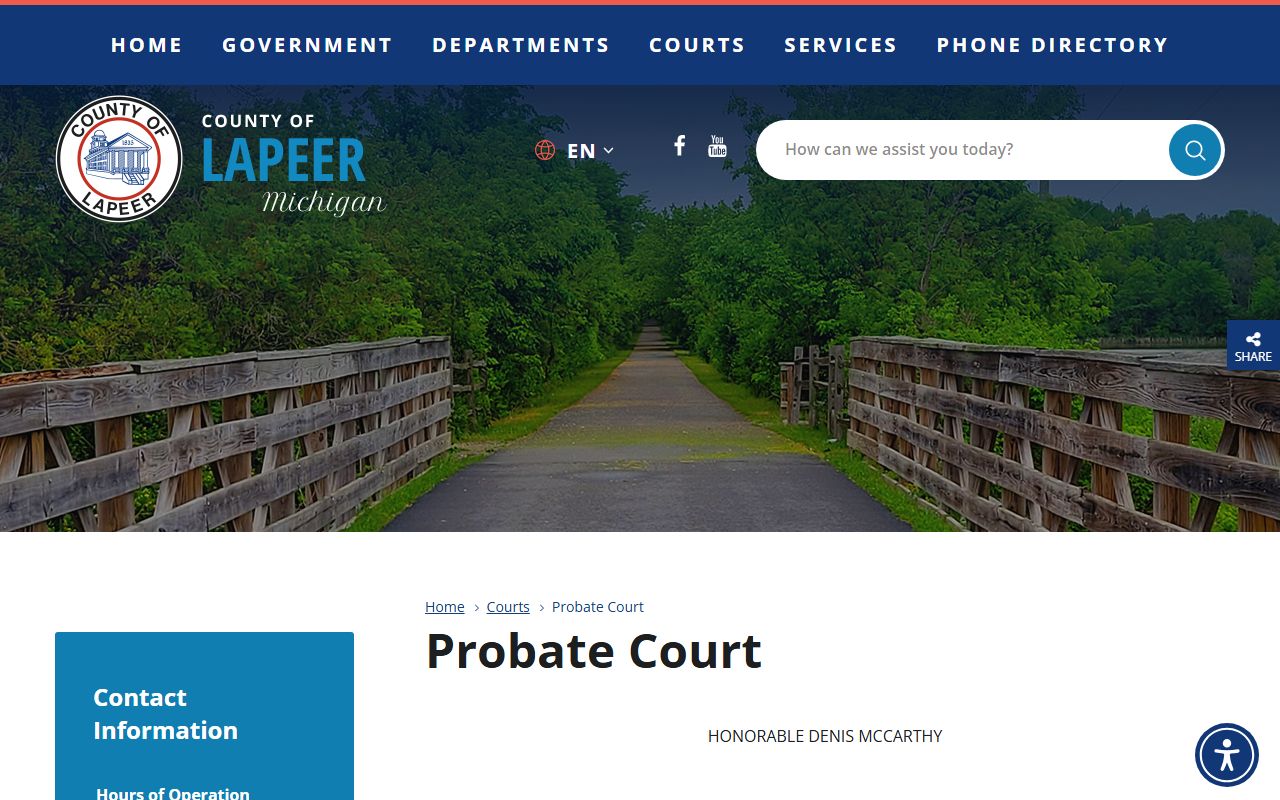
That page is the anchor for every probate task, from estate filings to guardianship forms and online payments.
Probate covers a wide range of matters, not just wills. The court's stated jurisdiction reaches deep into family and financial protection.
- Settlement of estates of people who have died.
- Trust matters, including some cases where the person created the trust.
- Conservatorship for adults or minors whose property needs management.
- Guardianship for legally incapacitated adults and for minors needing care and custody.
- Mental Health Code proceedings, such as involuntary hospitalization and assisted outpatient treatment.
- Guardianship for individuals with developmental disabilities.
- Protective orders, drain appeals, secret marriages, delayed birth registration, and wills for safekeeping.
Lapeer County Probate Terms Defined
Probate filings use words that rarely come up in daily life. A short glossary makes a case file easier to read. These terms show up across estate, guardianship, and conservatorship matters.
- Testator
- A person who makes a valid will before death.
- Executor
- The person named in a will to carry out its terms. Michigan often calls this role the personal representative.
- Intestate
- Dying without a valid will, so state law decides who inherits.
- Personal representative
- The person the court authorizes to settle a decedent's estate, pay debts, and distribute what is left.
- Guardianship
- A court case that appoints someone to make care and custody decisions for a minor or an incapacitated adult.
- Conservatorship
- A probate case that appoints someone to manage another person's money and property.
- Letters of authority
- The court document that proves a representative, guardian, or conservator has the power to act.
How to Search Lapeer County Probate Records
MiCOURT is the first online stop for probate cases. The Probate Court page links straight to the statewide MiCOURT Case Search. Select Lapeer County Probate Court, then search by name or case number. The index returns the docket, parties, hearings, and case status. It is not a full document library, so many papers still live only at the court counter. Online payments run through a GovPayNow link on the same page.
MiCOURT sits within the wider Michigan trial court system, shown on the Michigan trial courts overview.
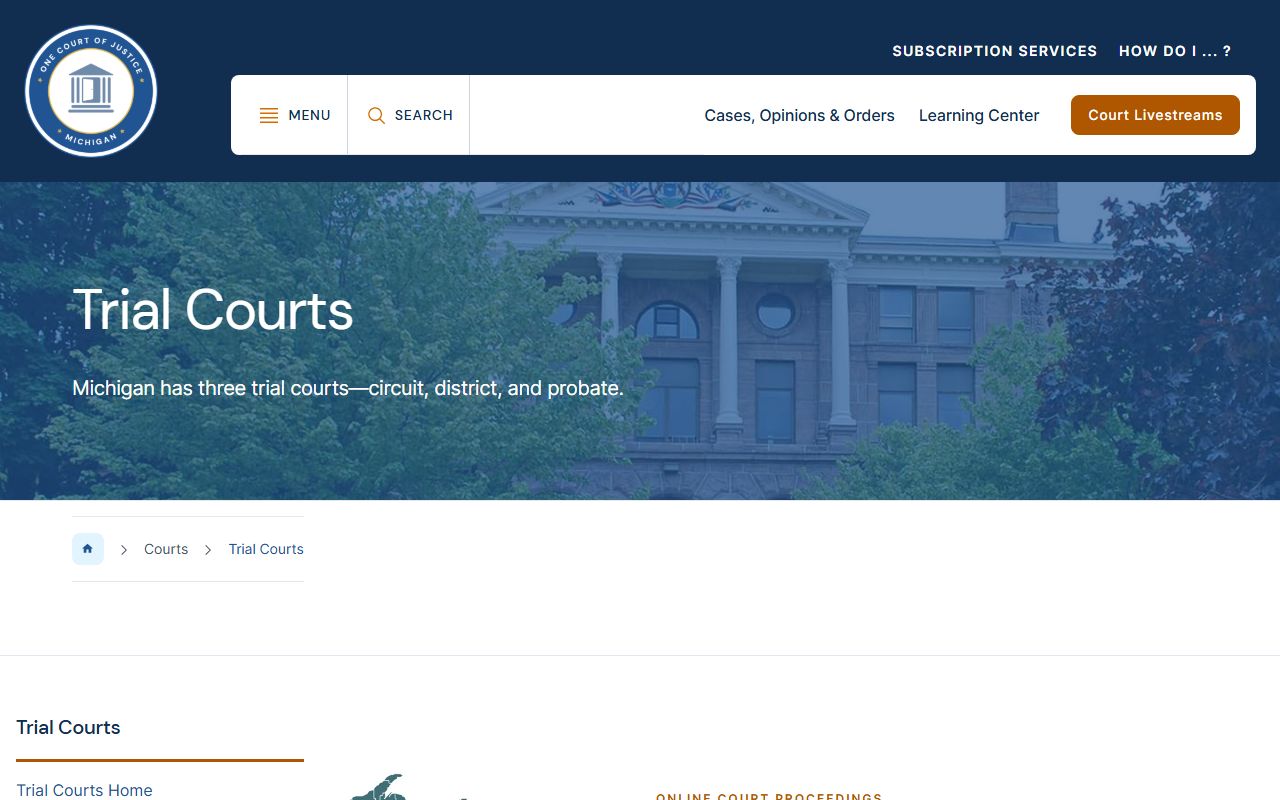
The same statewide index feeds other Lapeer County court records, so the search steps carry over from one court to the next.
The search screen presents a small set of fields. The table below lists what each one does when you look for a probate file.
| Field Label | Type | Required | Options / Format Notes |
|---|---|---|---|
| Court | Dropdown | Yes | Select Lapeer County Probate Court in MiCOURT. |
| Case Number | Text | Best if known | Probate case numbers use Michigan year, sequence, and type style. |
| Party / Name | Text | Optional | Search decedent, protected individual, petitioner, guardian, or conservator where public. |
| Case Type | Dropdown / filter | Optional | Estate, guardianship, conservatorship, trust, mental health, or adoption where visible. Restricted types may return no public results. |
| Filing Date Range | Date | Optional | Narrows older estate searches. |
| Submit / Search | Button | Yes | Runs the query. |
Note: MiCOURT shows the index and docket for a Lapeer County probate case, but certified copies and older paper files come from the Probate Court office itself.
Lapeer County Probate Court Location and Contact
The Probate Court shares the county complex with the Circuit Court, District Court, and County Clerk. Visitors enter from the Clay Street entrance on the south side of the building. The court keeps longer office hours than the clerk's vital-record counter, which helps readers plan a visit. Call ahead with case questions before you drive downtown.
Lapeer County Probate Court
255 Clay St.
Lapeer, MI 48446
810-667-0261
Mon-Fri 8:00 a.m.-5:00 p.m.
Staff at this office can point you to the right form and explain filing steps. They cannot tell you which choice fits your family, because that is legal advice the court may not give.
What Lapeer County Probate Records Show
A probate case file grows as the matter moves along. The header data appears first, then the parties, then the documents each stage produces. The table maps the common fields to what each one tells you. Mental health entries are often limited or nonpublic, so do not count on seeing them online.
| Field | What It Shows |
|---|---|
| Case number | The unique identifier for the probate matter. |
| Court | Names the Lapeer County Probate Court as the filing court. |
| Case type | Estate, guardianship, conservatorship, trust, mental health, or adoption where visible. |
| Filing date and status | When the petition opened and whether the case is open, pending, or closed. |
| Assigned judge | The probate judge handling the matter. |
| Decedent name | In estate cases, the person who died, with date of death where public. |
| Personal representative | The person managing and settling the estate. |
| Inventory value and fee status | The estate type and whether the inventory fee is paid. |
| Guardian or conservator | The appointed party in a protective case, plus letters of authority. |
| Docket entries | Petition filed, letters issued, inventory filed, creditor notice, hearings, orders, annual accounts, and discharge. |
| Documents | Not always available to download; certified copies come from the Probate Court. |
Note: Protected personal names may be public or restricted depending on the case type, so a guardianship or mental health file can return far less detail than an ordinary estate.
Probate Court Topics in Lapeer County
The county Probate Court page groups its work under subject links. Each link opens Michigan court forms and guidance for that topic. Reading the matching topic first saves a wasted trip to the wrong counter.
- Adoption.
- Conservatorship.
- Decedent estates and small estates.
- Guardianship.
- Mental health proceedings.
- Trusts and wills.
- Register of actions (ROA) and the inventory fee calculator.
The Probate Court also handles secret marriages and delayed birth registration. Ordinary marriage licenses and certificates instead run through the county clerk, covered on the Lapeer County marriage and divorce records page.
How Probate Works in Lapeer County
Every probate matter follows a set order, though the exact steps shift with the case type. The path below tracks the court's stated process from the first petition to the final discharge. Michigan SCAO forms handle most of the paperwork.
- Identify whether the matter is a decedent estate, small estate, guardianship, conservatorship, trust, mental health petition, or will safekeeping issue.
- Use the Probate Court page's subject links and Michigan SCAO forms. Court staff give filing-procedure information only, not legal advice.
- File the petition and forms with the Lapeer County Probate Court at 255 Clay St.
- Pay filing and inventory fees where required, and use the Michigan Courts Inventory Fee Calculator when it applies.
- Give statutory notice to interested persons, heirs, creditors, or protected individuals as the case demands.
- Attend any hearings the court schedules.
- Obtain letters of authority or the court's orders from the Probate Court.
- File inventories, accountings, annual reports, creditor notices, or closing documents based on the case type.
Important: Lapeer County Probate Court staff can explain filing procedures, but they are prohibited by law from giving legal advice or completing your forms for you.
Lapeer County Probate Filing and Inventory Fees
Probate costs vary by case type, and the biggest one usually scales with estate value. Michigan runs an online Inventory Fee Calculator for that charge, so the number comes from the estate total, not a flat rate. The county Probate Court page does not publish exact dollar amounts for every filing, so confirm current fees with the court before you file rather than relying on a guess. Online payments run through the GovPayNow link on the Probate Court page.
| Item | Amount / How It Is Set |
|---|---|
| Estate inventory fee | Scaled to estate value using the Michigan Courts Inventory Fee Calculator. |
| Petition or application filing fee | Set by the state court fee schedule; exact amount is not published on the county page, so confirm with the court. |
| Guardianship or conservatorship filing fee | Set by statute and the state schedule; verify the current figure with the court. |
| Certified copies | Confirm the per-document and per-page rate with the Probate Court. |
| Online payment | Accepted through the GovPayNow link on the Probate Court page. |
Note: The inventory fee turns on the value of the estate, so run the Michigan Courts Inventory Fee Calculator before you assume a total and always verify a filing fee with the court.
Federal Cases Beyond Lapeer County Probate
Not every matter involving money or property is a county probate case. Bankruptcy and federal lawsuits sit in a separate system. Lapeer County falls within the U.S. District Court for the Eastern District of Michigan. Those files are not kept at the county courthouse, and probate staff cannot pull them.
Federal case records live in PACER, which you reach through the PACER court lookup for the Eastern District.
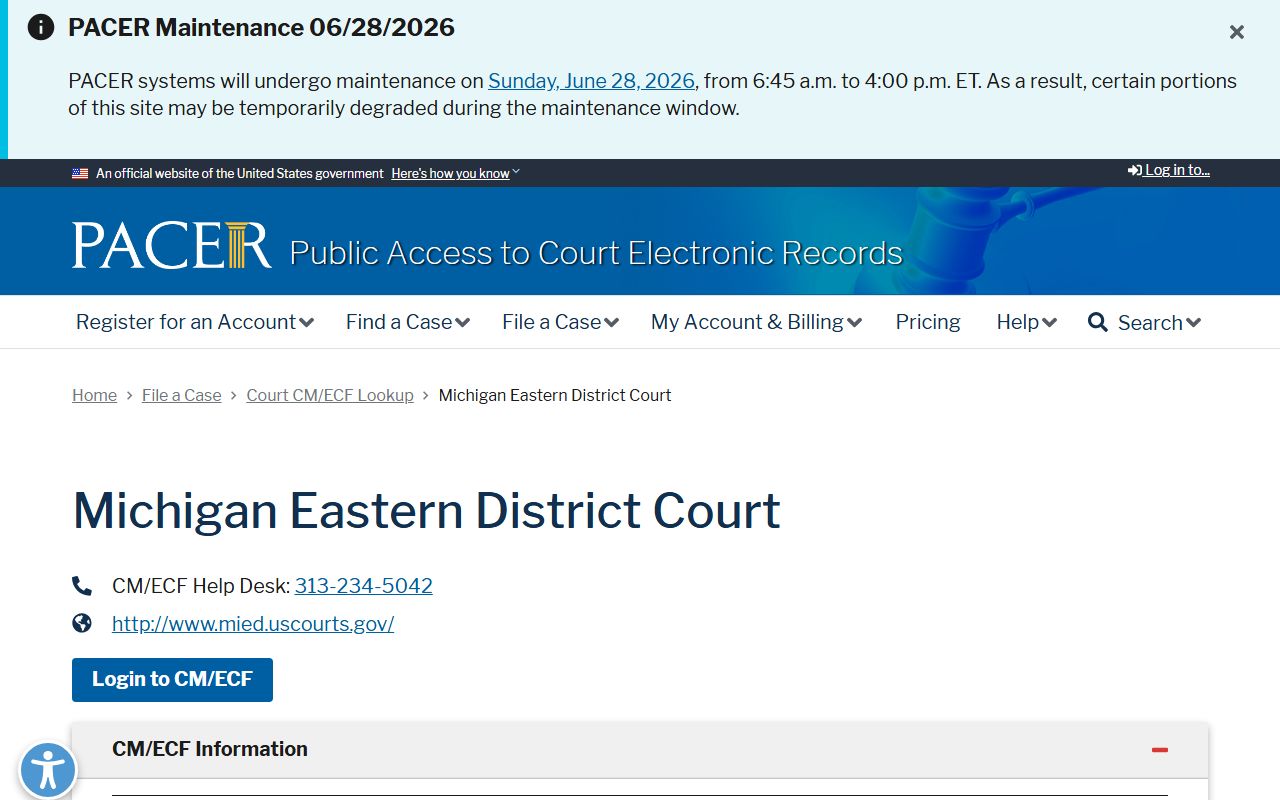
PACER charges per page for downloaded case information and requires an account, so it works differently from the free MiCOURT probate index.
Debt cases that wipe out or reorganize what a person owes go to the federal bankruptcy court, shown on the Eastern District of Michigan Bankruptcy Court site.
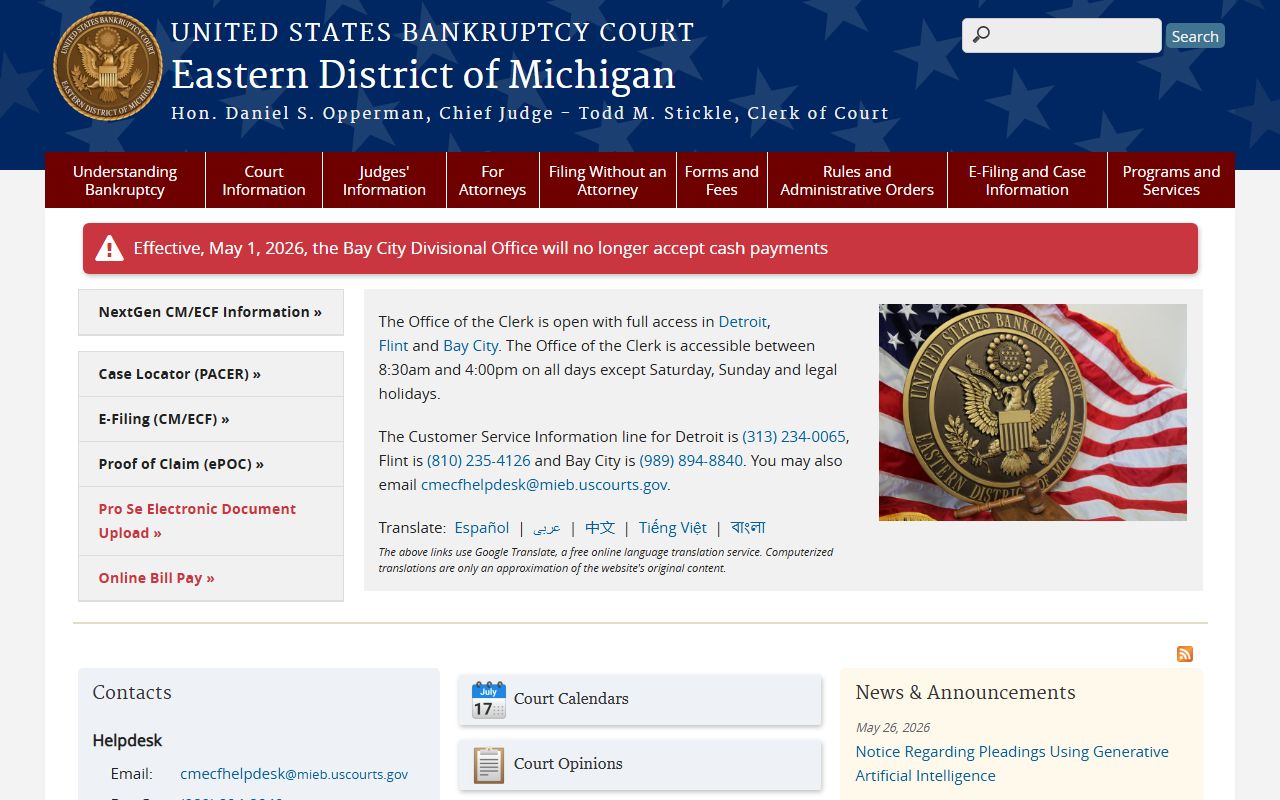
Bankruptcy files include Chapter 7, 11, 12, and 13 petitions, schedules, creditor lists, trustee notices, and discharge orders, none of which are county probate matters.
Attorneys file those bankruptcy papers electronically through the court's login at Bankruptcy CM/ECF.
The takeaway is simple. If the matter is a will, estate, guardianship, or conservatorship, it belongs at the county Probate Court, not the federal bankruptcy system.
Restricted Lapeer County Probate Records
Some probate files are closed to the public. Adoption cases are confidential, and name searches usually suppress adoption party information. Mental health proceedings stay restricted because they hold medical information. Guardianship files for people with developmental disabilities are also confidential. Wills deposited for safekeeping before a person dies are not ordinary public estate files. Protected personal data gets redacted across every case type.
Juvenile records carry their own protection under MCL 712A.28.
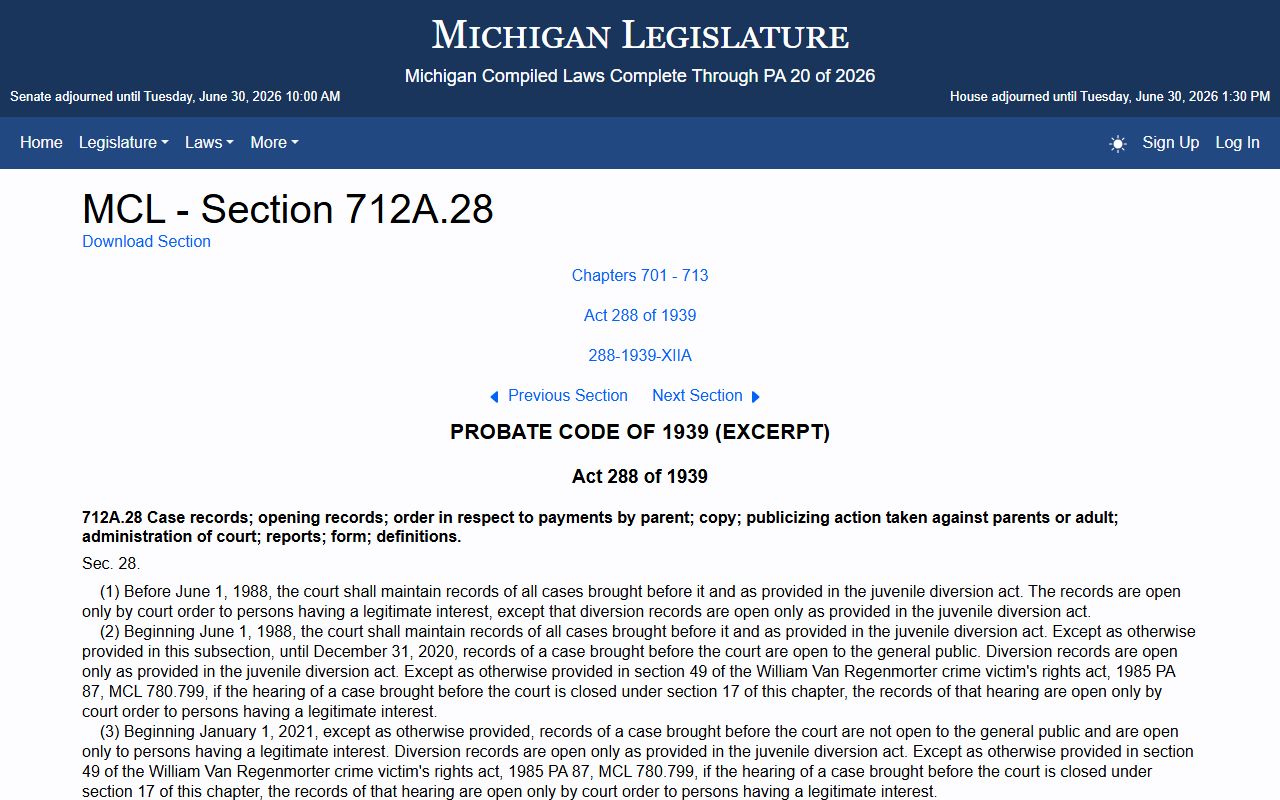
That statute is one reason a public probate search may return nothing for a matter that clearly exists.
A few categories are commonly closed or redacted in probate and related family files:
- Adoption files and adoption party information.
- Mental Health Code proceedings and related medical information.
- Guardianship records for individuals with developmental disabilities.
- Wills deposited for safekeeping before the maker's death.
- Juvenile records protected under MCL 712A.28.
- Protected personal data, such as Social Security and account numbers.