
How to Search Lapeer County Court Records
The main online path is MiCOURT Case Search, the Michigan judiciary's statewide trial-court portal at micourt.courts.michigan.gov. The Lapeer County courts page links its "Search For Cases" button straight to MiCOURT, and the Probate Court page links there too. Depending on the court you pick, MiCOURT may show civil, traffic, criminal, domestic, and probate cases. It is the first stop for the 40th Circuit Court, the 71A District Court, and the Lapeer County Probate Court. The portal returns index, docket, party, hearing, and case-status data. It is not a full document library, so some filed papers still live only at the court counter.
Before you start, gather what you know about the case. A case number is the cleanest key, because common Lapeer County surnames can return many people. If you only have a name, have the exact spelling ready, and for criminal searches expect a possible date-of-birth prompt.
The starting screen for a Lapeer search is the statewide MiCOURT trial court case search, where you pick a court and a search mode before entering any details. Its layout is the same one used across Michigan trial courts.
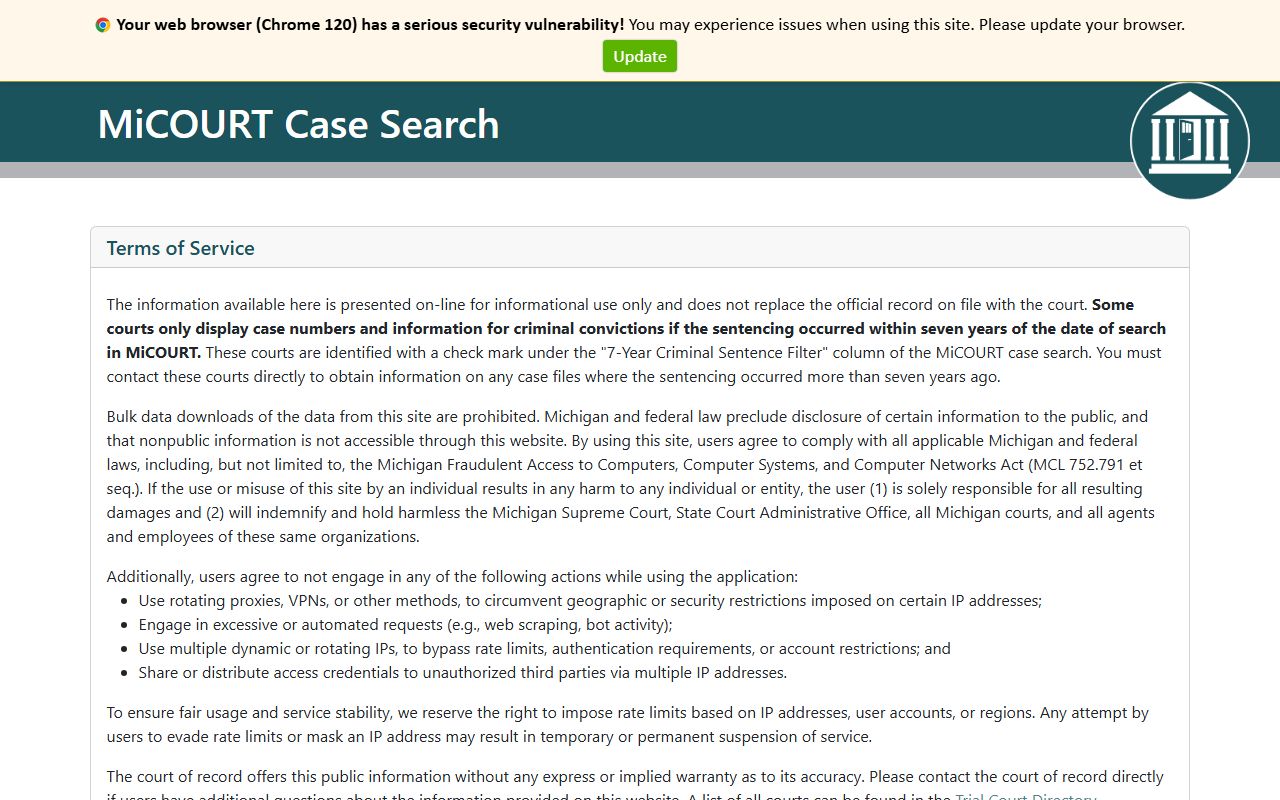
Because the portal covers every Michigan trial court, you must select a Lapeer court inside it or the results will belong to another county. These steps walk through a typical search:
- Open the county courts page or go straight to MiCOURT Case Search.
- Choose the court level first. Pick the 40th Circuit Court for felonies after bindover, divorce, custody, personal protection orders, and large civil claims. Pick the 71A District Court for traffic, misdemeanors, small claims, and general civil under the district limit. Pick the Probate Court for estates, guardianships, and trusts.
- Search by case number when you have one. This route avoids the false matches that plague common names.
- Search by name when you do not. Enter the exact last name and first name, and answer any date-of-birth prompt on criminal searches.
- Open the matching case and note the case number, court, case type, filing date, status, parties, docket entries, hearing dates, and judge.
- Request a copy from the office that owns the record if the document is not online. That is the County Clerk for Circuit files, the District Court for its own cases, and the Probate Court for probate files.
Lapeer County Court Records Search Fields
The MiCOURT form changes slightly by court and by search mode, but the same core fields appear across Lapeer courts. The court selector and search mode drive everything else, so set those first. Party searches lean on name fields, while a case-number search skips them entirely. The table below lays out the fields you are likely to see and how to fill each one.
| Field Label | Type | Required | Notes / Format |
|---|---|---|---|
| Court | Dropdown | Yes | Select the Michigan court. For Lapeer, use the 40th Circuit Court, 71A District Court, or Lapeer Probate Court. |
| Search mode | Tab / radio | Yes | Name or party search versus case-number search; options vary by court. |
| Last Name / Business Name | Text | Usually yes for party search | Surname or organization name; partial entries return broad results. |
| First Name | Text | Depends on mode | Narrows an individual party search. |
| Middle Name / Initial | Text | No | Add when known to cut false matches. |
| Date of Birth | Date | Often for criminal search | Format MM/DD/YYYY; some courts require it to reduce mistaken identity. |
| Case Number | Text | Yes for case-number search | Michigan numbers combine a year, a sequence, and a two-letter type code, such as 24-12345-FH. |
| Case Type | Dropdown | No | Criminal, civil, traffic, domestic, or probate when the court exposes it. |
| Filing Date / Range | Date range | No | Narrows broad searches; not always shown. |
| Submit / Search | Button | Yes | Starts the search. |
The field layout stays consistent across Michigan trial courts, which is why a look at another court's public screen makes the Lapeer version easy to predict. The 67th District Court records search page shows the same statewide MiCOURT form as a general reference point.
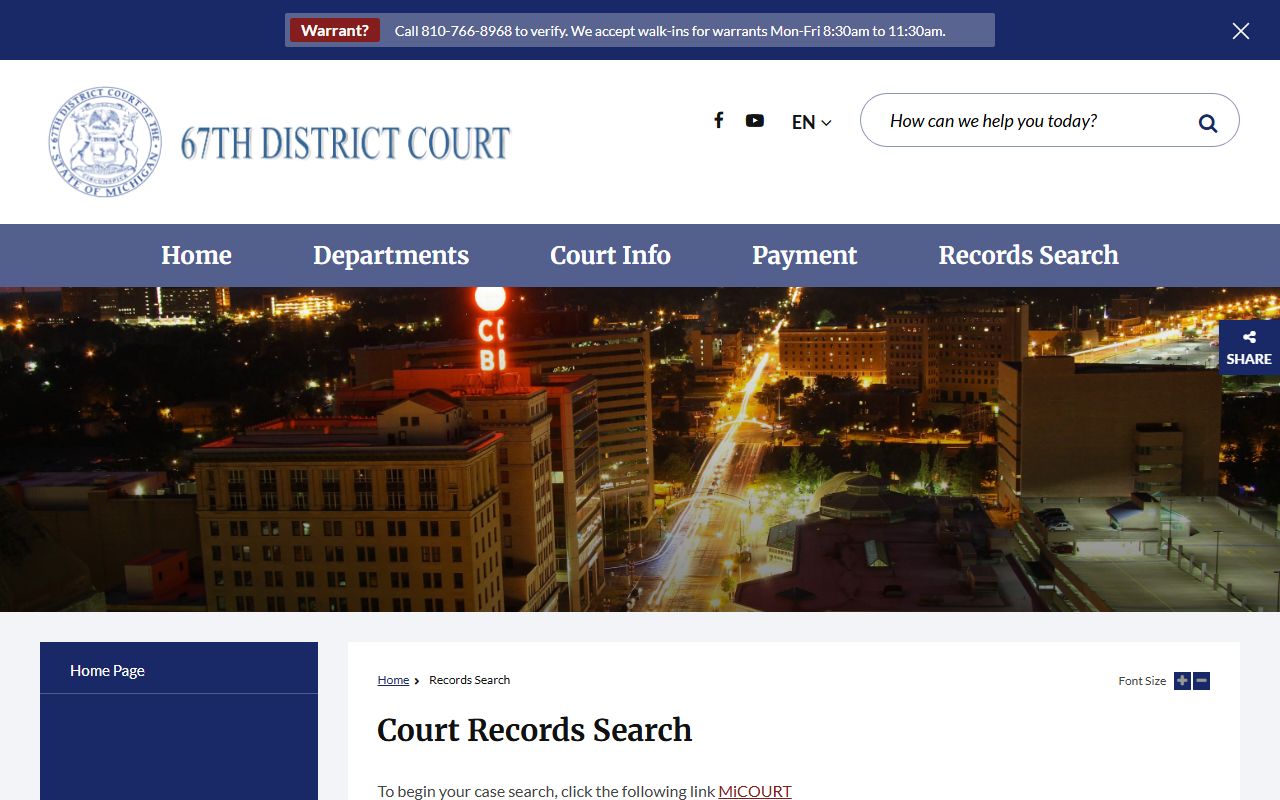
That page belongs to another county and holds no Lapeer County court records, so use it only to learn the form before selecting a Lapeer court in MiCOURT.
Note: A case-number search is the most reliable route in Lapeer County because the two-letter type code confirms you have the exact case rather than a same-name stranger.
Types of Lapeer County Court Records
The three trial courts in the county each produce their own records. The 40th Circuit Court handles felony criminal files after bindover, civil claims above the district limit, divorce and family cases, and personal protection orders. The 71A District Court handles misdemeanors, traffic tickets and civil infractions, small claims, landlord-tenant matters, and general civil claims within its dollar limit. The Probate Court keeps estate, guardianship, conservatorship, trust, and mental-health files.
Which office you contact depends on the record. Circuit files route through the County Clerk, who serves as clerk of the 40th Circuit Court. District and probate records stay with their own court offices. The main categories break down like this:
- Civil Circuit records, including complaints over the district limit, property disputes, business cases, zoning appeals, and personal protection orders.
- District civil and small-claims records for money claims within the district limit, plus landlord-tenant and land-contract summary proceedings.
- Criminal records, from District Court misdemeanors and traffic misdemeanors up to felony files that move to Circuit Court after bindover.
- Traffic civil-infraction records held by the 71A District Court Traffic Division.
- Family Court records for divorce, custody, support, paternity, name changes, and juvenile matters.
- Probate records for estates, wills, trusts, guardianships, conservatorships, and mental-health proceedings.
Sheriff arrest reports, jail records, and criminal-history reports are separate products. Those come from the Sheriff's Records Division or the Michigan State Police, not from the court case file. The county traffic case file also differs from the Secretary of State driver record, a split that matters for anyone reading a Lapeer County traffic court record.
What Lapeer County Court Records Show
A public case record ties together the who, what, and when of a case. The docket lists every filing and hearing in order, while the case header carries the identifiers. Michigan case numbers end with a two-letter code that names the case type, such as GC for general civil or FH for a felony. The fields below are the ones a MiCOURT result and a clerk case file most often expose.
| Field | What It Shows |
|---|---|
| Case Number | Year, sequence, and two-letter type code that identify the case and its category. |
| Court | The 40th Circuit, 71A District, or Lapeer Probate Court that owns the file. |
| Filing Date | The date the complaint, petition, citation, or other opening paper was filed. |
| Case Type | Civil, criminal, traffic, domestic, probate, or another local category. |
| Parties | Plaintiff and defendant in civil, People and defendant in criminal, petitioner and respondent in family or probate. |
| Attorney | Attorney name and bar number where shown on the public docket. |
| Judge / Magistrate | The assigned judicial officer and any hearing officer. |
| Docket Entries | Complaint, arraignment, motions, orders, judgment, sentencing, and payment events in date order. |
| Hearings | Date, time, courtroom, hearing type, and assigned judge or magistrate. |
| Financials | Fines, costs, restitution, bond, filing fees, and payment status where public. |
| Status / Disposition | Pending, disposed, dismissed, bound over, or set aside where access is restricted. |
Online access often shows the docket text without downloadable images of the actual pleadings. When you need the signed order or the full filing, the clerk of the owning court can pull it and certify a copy.
Public Access Framework for Lapeer County Court Records
Two different rulebooks govern access, and mixing them up wastes time. Court case files run under Michigan court rules, chiefly MCR 8.119, which sets how courts keep records, what stays nonpublic, and how protected personal information is handled. County agency records, by contrast, fall under the Freedom of Information Act. Michigan's FOIA policy in MCL 15.231 favors public access to government records, and the fee rules sit in MCL 15.234.
So a sheriff incident report, a jail administrative record, or a prosecutor file uses FOIA, while a Circuit Court case file uses the clerk's court-record procedures. The county's rules book explains the access framework in detail. The MCL 600.571 statute is why the Lapeer County Clerk also serves as clerk of the 40th Circuit Court, so felony and divorce files route through that one elected office.
The Michigan Supreme Court publishes the full court rules online. Chapter 8 of the rules covers court records and access, and it is worth a look before a records dispute. You can browse the Michigan Court Rules Chapter 8 text for the exact language.
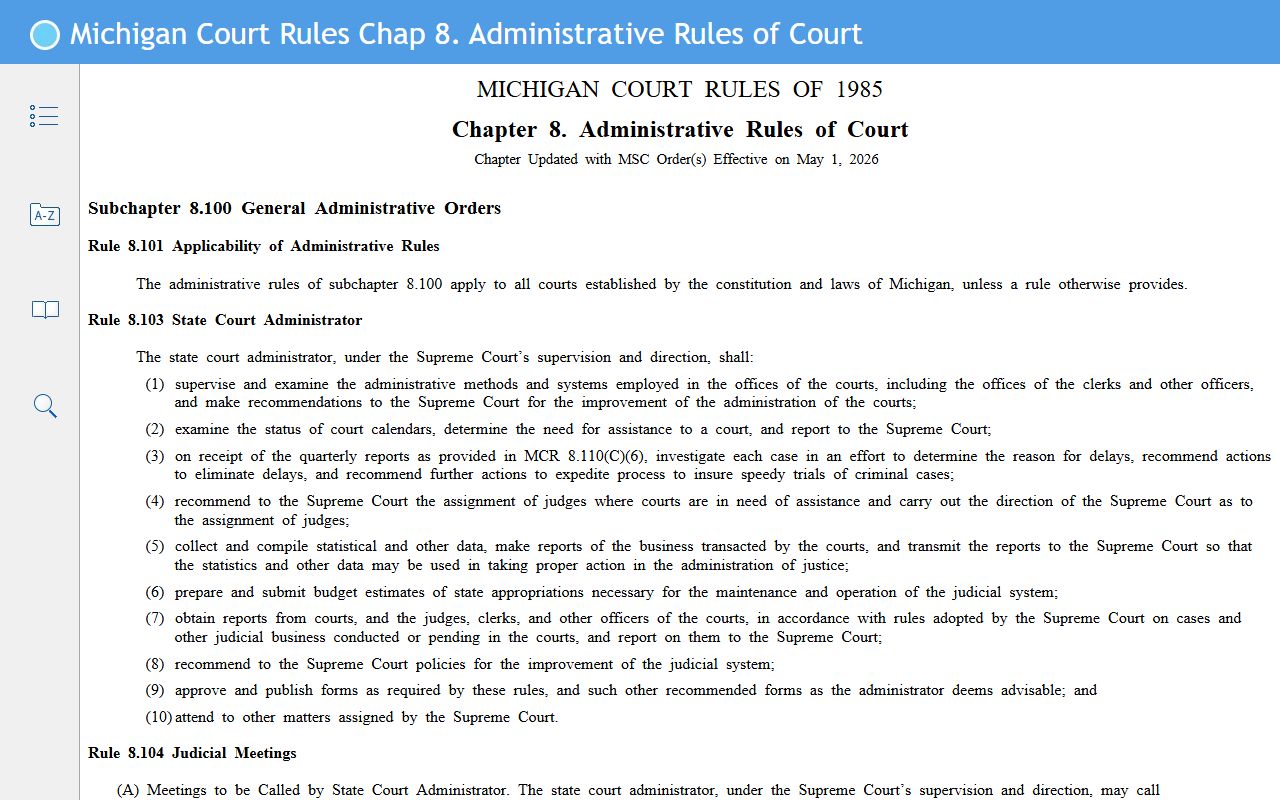
That rule set is the reason a court file and an FOIA response can look so different. For county agency records, the FOIA form asks you to describe the records and choose a paper copy, an electronic copy, or inspection before copying.
Note: A court case file and a Michigan State Police ICHAT criminal-history report are separate products; the file shows local proceedings, while ICHAT is a statewide history search.
Records That Are Sealed or Confidential in Lapeer County
Not every case is open. Michigan law shields several categories from the general public, and MiCOURT suppresses them the same way. Juvenile delinquency and child-protective files in the Circuit Court Family Division are restricted under MCL 712A.28. Adoption records stay confidential, mental-health proceedings in Probate Court involve protected medical data, and birth records under 110 years old are confidential under state vital-record rules.
Set-aside and Clean Slate orders make eligible convictions nonpublic. Under MCL 780.621, a person can apply to set aside a qualifying conviction, and the automatic process removes many convictions from public view after the statutory waiting period. Once an order is granted, that case should not surface in an ordinary MiCOURT or ICHAT search the way an open conviction would.
Some details are always redacted. Social Security numbers, financial-account numbers, minor names, victim information, and medical material are withheld even inside otherwise public files. A reader who needs to view or correct a restricted record should go to the convicting or owning court rather than trusting a commercial background site. The court and the Michigan State Police can confirm whether a set-aside actually took effect.
Requesting Court Records in Person and by Phone
Online access is only the first channel. When a document is not online, or you need a certified copy for a legal proceeding, you go to the office that owns the record. Circuit Court case files, including felony files and divorce cases, run through the County Clerk on the second floor of the county complex. The public may inspect open court files at the counter, and staff can explain the copy and certification process.
Phone lines reach each court directly. The Circuit Court answers at 810-667-0358, the 71A District Court at 810-667-0314, and the Probate Court at 810-667-0261. Phone staff can walk you through the access steps, but they cannot confirm the existence of a nonpublic case or give legal advice. For a Circuit Court file, the County Clerk certifies the copy; more detail on that office lives on the Lapeer County Clerk page.
Lapeer County Clerk / 40th Circuit Court
255 Clay St., Suite 227
Lapeer, MI 48446
810-667-0358
Mon-Fri 8:00 a.m. to 4:30 p.m.
Sheriff, prosecutor, and county administrative records take a different path. Those are requested through FOIA, sent either to the department that keeps the record or to the county FOIA coordinator in the Administration Office. Mail and email options exist where a court publishes them, but court case files remain governed by court rules rather than the FOIA process.
Statewide, Appellate, and Federal Record Searches
Some Lapeer matters live outside the county trial courts. Appeals from the Circuit and Probate Courts move to the Michigan Court of Appeals, and those opinions and orders are searchable on a separate statewide system. The judiciary runs its own Michigan appellate case search for Court of Appeals and Supreme Court decisions.
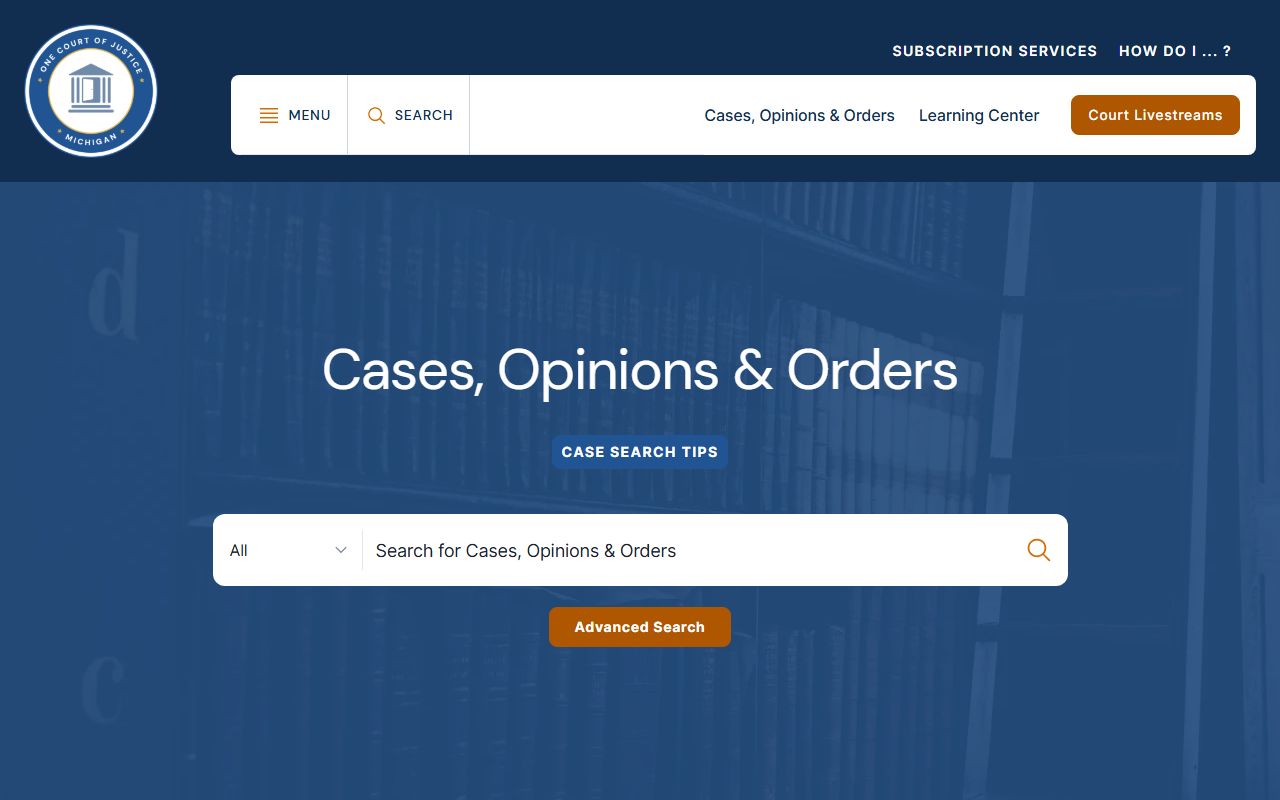
That appellate portal covers only higher-court decisions, so a trial-level docket still comes from MiCOURT. For statewide criminal history, the Michigan State Police ICHAT service returns a paid report that is distinct from any single court file. The MDOC OTIS tool separately tracks state prison, parole, and probation status.
Free legal-research sites can supplement official searches. One long-running option indexes court opinions and dockets from many jurisdictions and is handy for reading a published decision in full. The nonprofit CourtListener legal-research archive is one such tool.
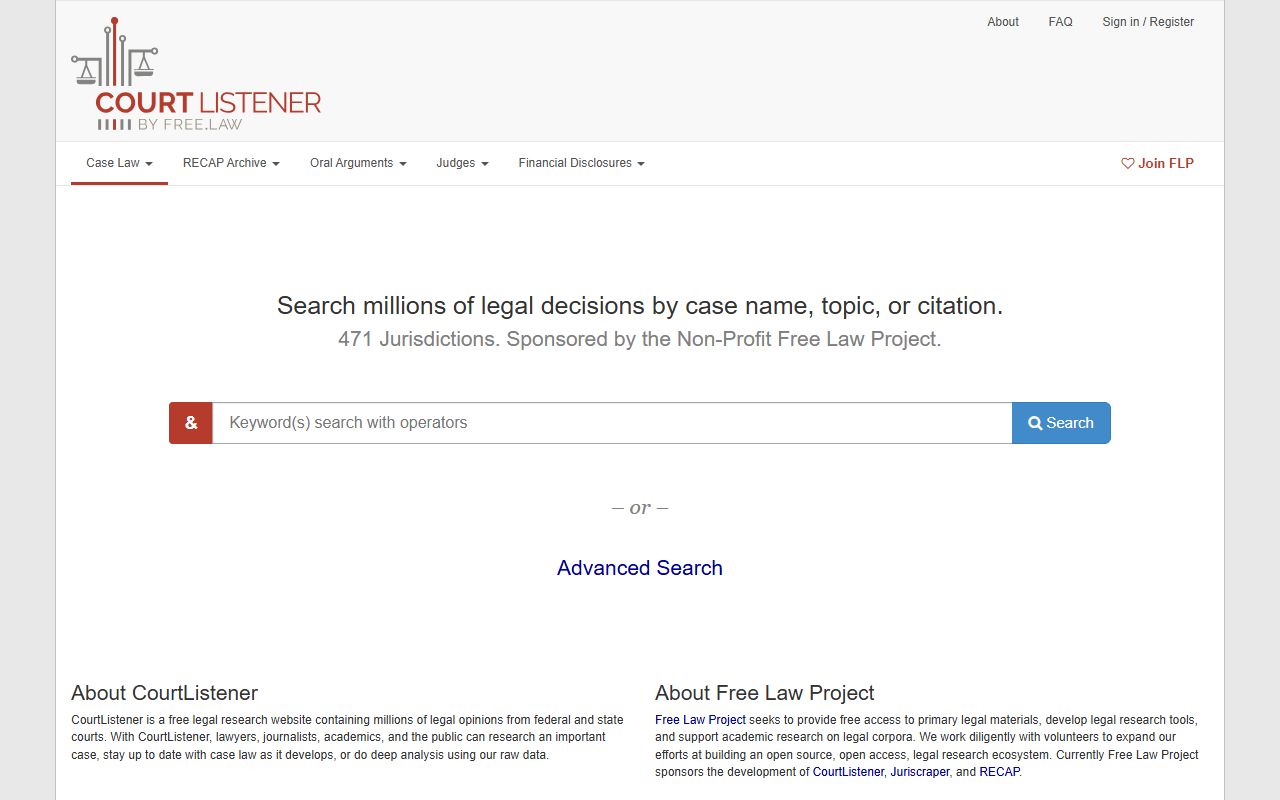
CourtListener helps most for appellate and federal opinions rather than a routine Lapeer traffic ticket. Federal cases involving Lapeer County residents are filed in the U.S. District Court for the Eastern District of Michigan, not at the county courthouse.
Federal civil suits, federal criminal prosecutions, and habeas actions run through that district court, usually out of Detroit or Flint. Its records sit behind PACER, the federal case-access system. The court explains the process on its Eastern District federal court records page.
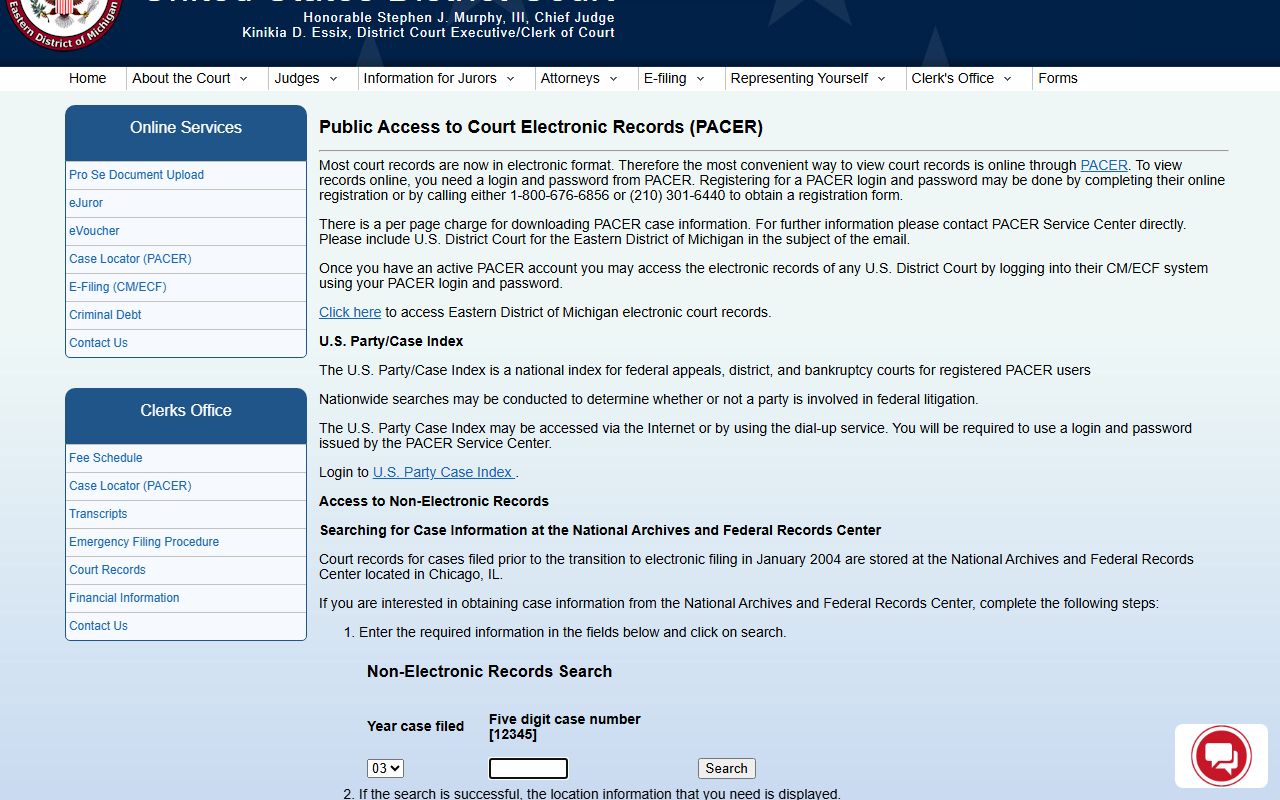
A PACER account is required for federal dockets, and per-page fees may apply. For most everyday Lapeer County court records, though, MiCOURT and the county court offices remain the primary search channels.